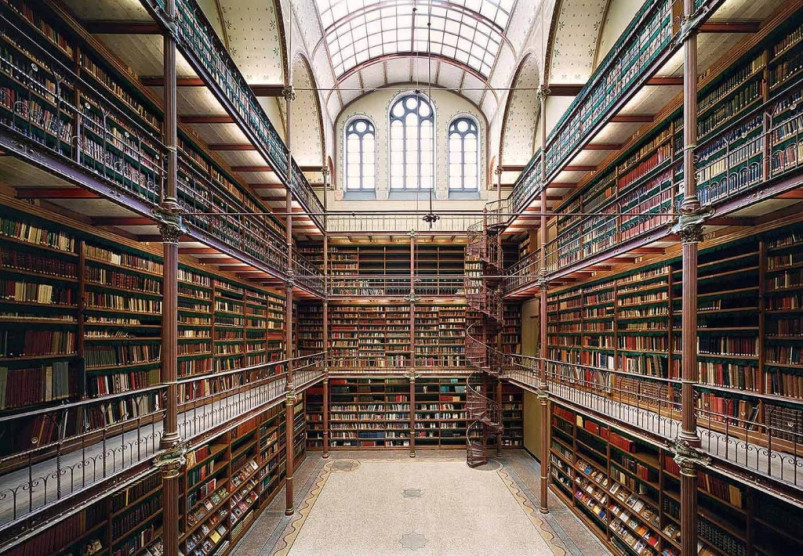

The Freedom to Read Project article examines the rising legal argument that public library book curation constitutes “government speech”—a classification that would exempt such decisions from First Amendment scrutiny. This doctrine, being advanced in cases like Little v. Llano County (where 17 states supported treating library decisions as government expression), threatens to transform libraries from neutral knowledge repositories into “silos of partisanship.”
The piece traces the Founders’ vision for libraries, highlighting Benjamin Franklin’s 1731 Library Company of Philadelphia, which he credited with improving “the general conversation of the Americans” and making “the common tradesmen and farmers as intelligent as most gentlemen from other countries.” By 1800, over forty such libraries existed across the United States, establishing a tradition of libraries as equalizers ensuring access to knowledge regardless of background.
The article warns that treating library collections as government speech would grant political officials sweeping power to remove books based on ideological preferences, directly contradicting libraries’ historical role as physical manifestations of the “marketplace of ideas.” Under the government speech doctrine, the state retains significant leeway in its own expression—meaning if libraries are deemed government speakers, officials could legally restrict access to politically disfavored viewpoints.
The piece argues that libraries serve as unique democratic institutions where communities access diverse perspectives at little to no cost. For many—particularly seniors and those with limited resources—libraries represent the only available source for information on restricted topics. Classifying their collections as government speech would fundamentally erode the First Amendment protections essential to informed citizenship.