

Technology
-

New Resources from FADGI on Content Authenticity and Provenance for AI-impacted Content
The Federal Agencies Digital Guidelines Initiative (FADGI) released two new draft resources open for public comment: “TCR4CAP: Tiered Community Recommendations for Content Authenticity and Provenance, with a focus on LAM collections content impacted by artificial intelligence” and a supporting technical assessment report on audiovisual collections. These aim to help libraries, archives, and museums document authenticity…
-
HathiTrust receives grant to deliver AI-enabled access to digital books
HathiTrust received a $5 million, five-year Mellon Foundation grant, partnering with Northeastern University Library and Authors Alliance, to develop responsible AI tools for discovering and analyzing its 19 million digitized volumes. The Transparent Books project will improve metadata, enable interactive search, and provide verified resources for scholarly and public-interest use. https://www.hathitrust.org/press-post/hathitrust-receives-grant-to-deliver-ai-enabled-access-to-digital-books/
-
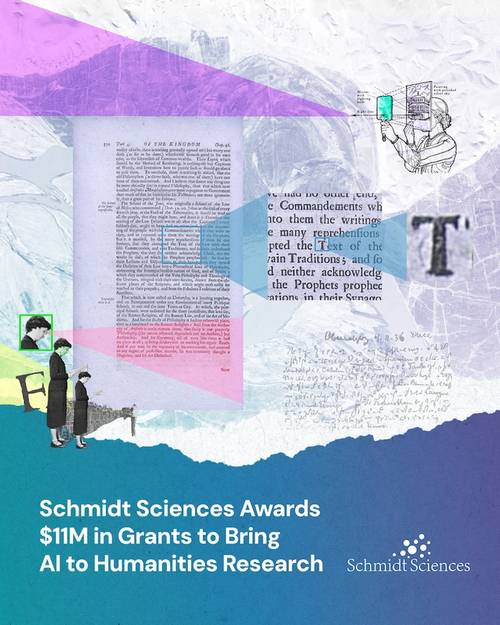
Schmidt Sciences Awards $11M For AI In Humanities
Schmidt Sciences has awarded $11 million to up to 23 research teams worldwide to develop and apply artificial intelligence tools tailored to humanities fields including archaeology, history, literature, and related disciplines. The Humanities and AI Virtual Institute (HAVI) aims to overcome limitations of current AI models, which are trained primarily on contemporary data and modern…
-

How does the First Amendment govern liability for AI?
Drawing on cases like Winter v. G.P. Putnam’s Sons (no liability for a faulty mushroom guide) and New York Times v. Sullivan, this FIRE article argues that First Amendment principles protect AI outputs from broad tort liability. Nearly 100 lawsuits seek to hold developers accountable via products liability or negligence for harmful advice. Courts have…
-

‘I’m not a programmer’ anymore: Linus Torvalds on the only two tools he uses now
At the Open Source Summit in Mumbai, Linux creator Linus Torvalds made a striking admission: “I’m not a programmer, I’m a development lead.” In an interview with ZDNet’s Steven J. Vaughan-Nichols, Torvalds revealed that his daily workflow now relies on just two tools—Git and email—plus Google for lookups. While he still writes small patches, they…
-

Python for All: A Library Workshop for Bridging AI Literacy and Coding Skills
Academic librarians Kristen L. Scotti and Lencia McKee designed an innovative workshop bridging artificial intelligence literacy and Python coding skills, teaching programming through generative AI chatbots. Published in College & Research Libraries, the study documents a workshop reaching 62 participants from diverse academic backgrounds. The program responds to growing cross-disciplinary demand for programming competencies, positioning…
-

Environmental Health Advances launches as newest ARC Alliance diamond-open-access journal
The Academic Research Community (ARC) Alliance has officially launched Environmental Health Advances (EHA), a new diamond open-access journal dedicated to environmental health sciences. The publication will focus on advancing knowledge about toxicant-induced disease while highlighting strategies to protect and improve human health. Led by a distinguished team of editors-in-chief from five major research institutions—Dana Dolinoy…